Buying some drives from Datablocks
Date:
A while back, I learnt of the practice of buying white label and recertified hard drives: the idea being that large batches of good drives sometimes get returned to OEMs by hyperscalers. They can then be retested and sold either with the branding, or with the branding removed (although can sometimes have small scratches and such).
Essentially, if I decide to get a white label drive, then the original manufacturer is off the hook in regards to what happens with it, however, it can still very much be a good drive with a low RMA rate (less than a percent), so I can actually get a really good deal.
One such vendor that is available in Europe is Datablocks, I think I heard about them on HackerNews and saved the link for later. Eventually, I decided to get a few 1 TB HDDs from them because I found out that the regular Seagate 1 TB drives I usually got from a local e-commerce store went up in price from like 40-50 EUR all the way to 110 EUR, which I think is pretty insane. Not sponsored by them in any way, just decided to share my experience.
The good
I don't really use high capacity drives, because I get them in multiples for backup reasons and having spares, and since I compress my data and don't really have that much of it, 1 TB drives still make sense (unless there's a good deal on 2 TB drives, which there wasn't).
There were still some in stock, so I went for the desktop drives:
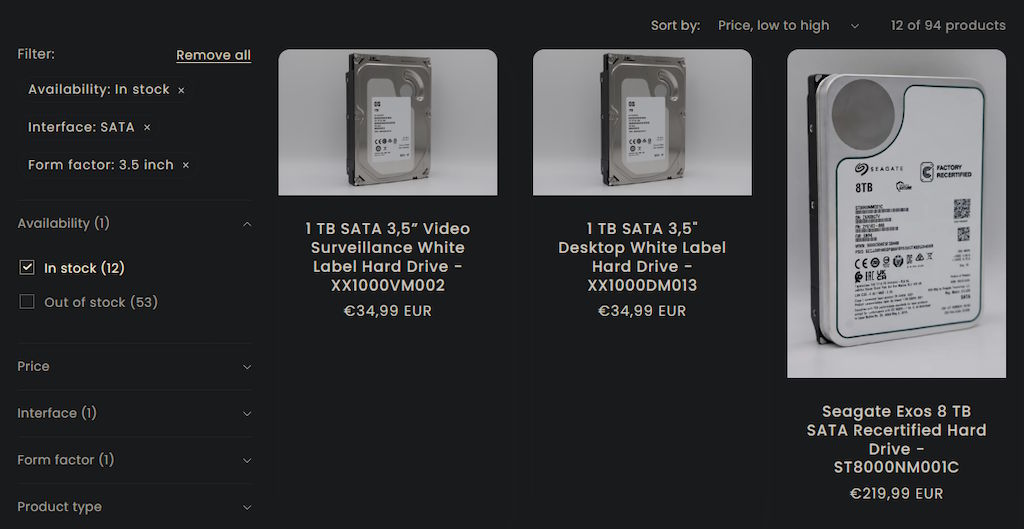
Look at that: that's 35 EUR for a 1 TB drive, even cheaper than Seagate drives used to be back when the prices were actually decent. There was shipping I had to pay to get them delivered to Latvia, which was short of 30 EUR total - that wasn't too pleasant, but since I got two drives for about 70 EUR, the total came out to around 100 EUR, which is still somehow cheaper than a single drive from a local store.
Shipping was done through DPD and the package arrived within a week, safely:
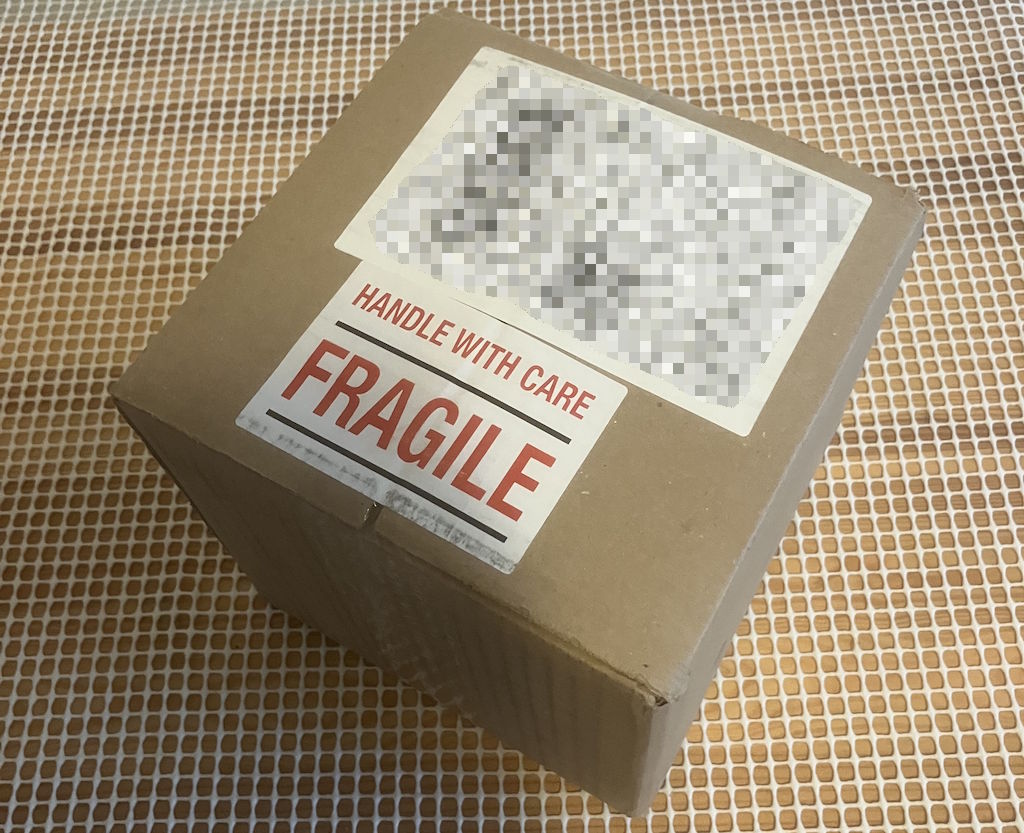
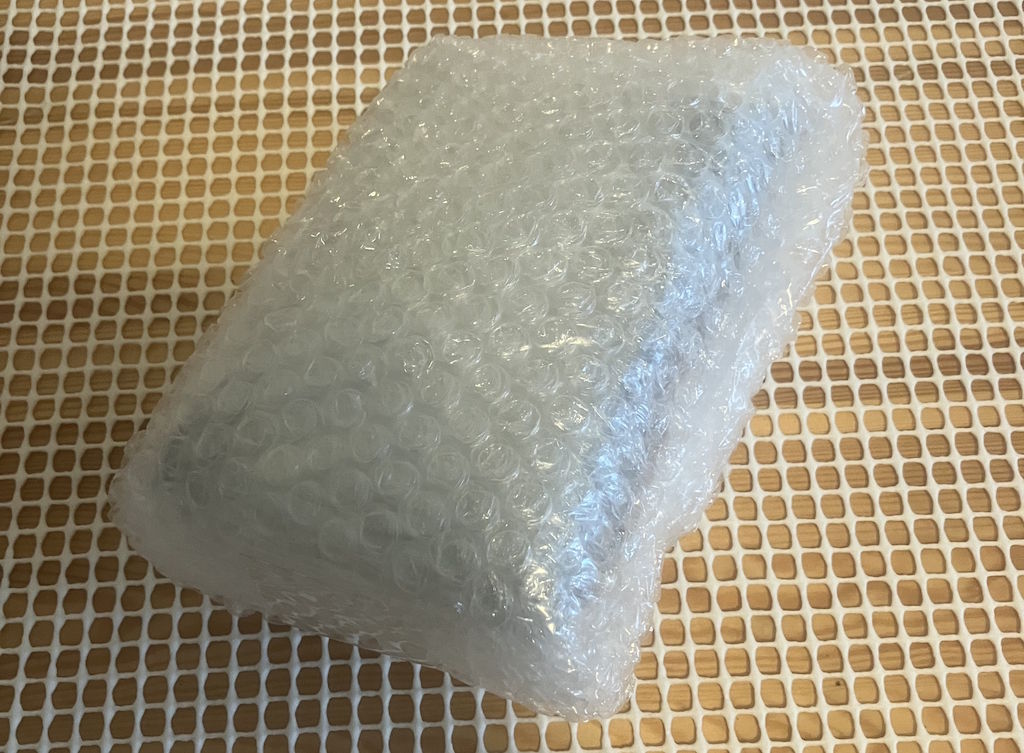
There was some of that packing paper inside (maybe the box itself is a bit too big for the contents), and the drives themselves were wrapped in bubble wrap nicely:
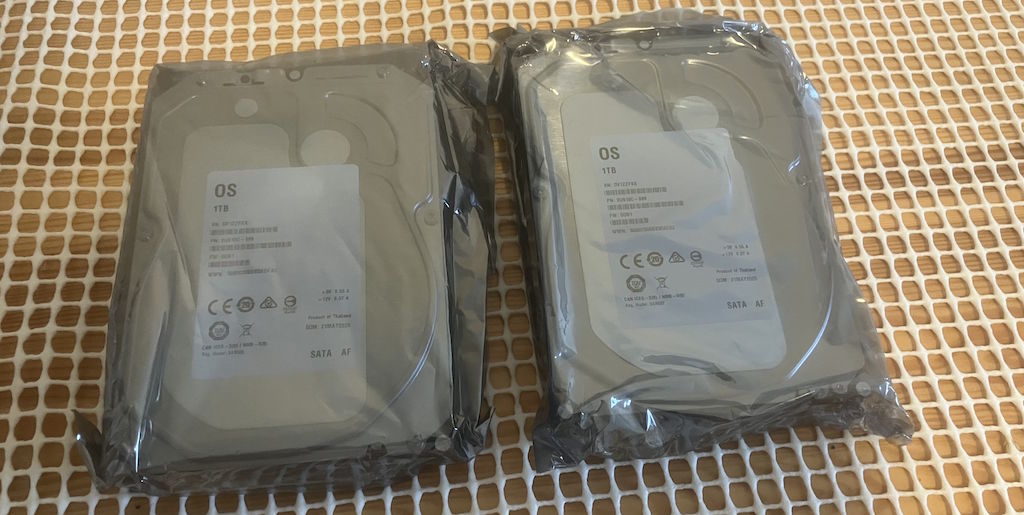
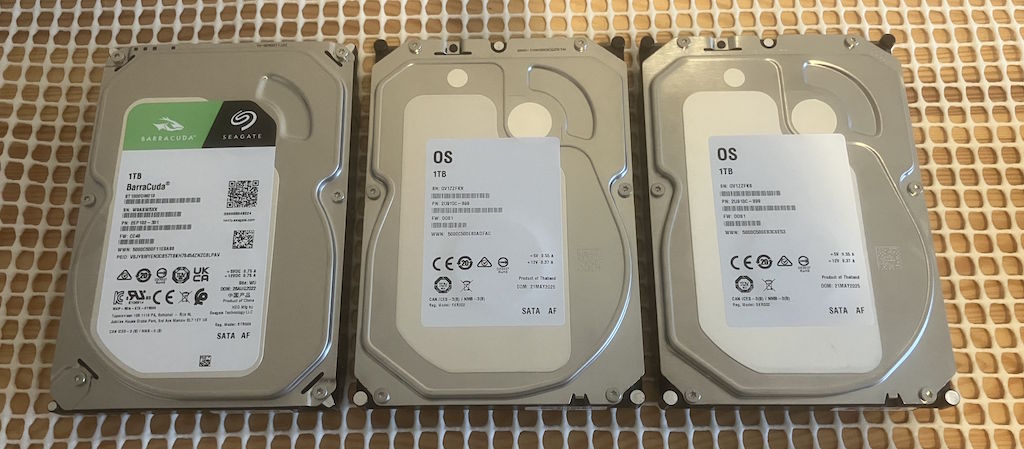
Here are the drives, nothing special about them, they came in sealed packages, just like new ones do:
For comparison's sake, here's one of the Seagate drives (actually the last new one I had), as you can see, they look pretty similar and there's also no obvious scratches or defects that I can notice:
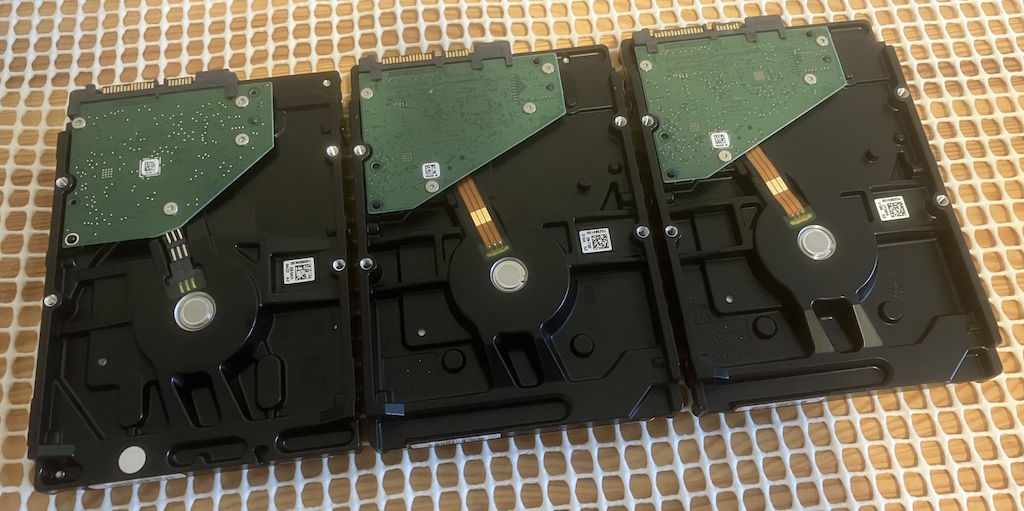
Same on the back, visually, everything looks okay:
Now, at work I've run into issues with using HDDs, mostly due to random reads and writes being bad due to their nature: in particular, when trying to host an instance of S3 compatible software, such as Garage. There, the read and write performance plummets when the files are chunked, or alternatively, you have to give up storage efficiency by increasing the chunk sizes.
Regardless, for my personal use, HDDs are more than enough, given that they have decent capacity and are still cheaper than equivalent SSDs most of the time - as of the time of writing this, 1 TB SSDs would cost about 120 EUR each, which is way outside of my budget. For my homelab servers, I usually get a small SATA SSD for the boot drive and everything else, including databases, lives on the HDDs, because thankfully I don't really run anything public or at least in high demand on those boxes.
For my main PC, I have a 1 TB SATA SSD for projects and games, as well as another 1 TB NVMe SSD for the boot drive, but my hand was more or less forced there, because I ran out of SATA ports - since I have both a backup drive locally for each HDD (nothing fancy like RAID, just synchronizing them with FreeFileSync), and then further replicate that storage remotely.
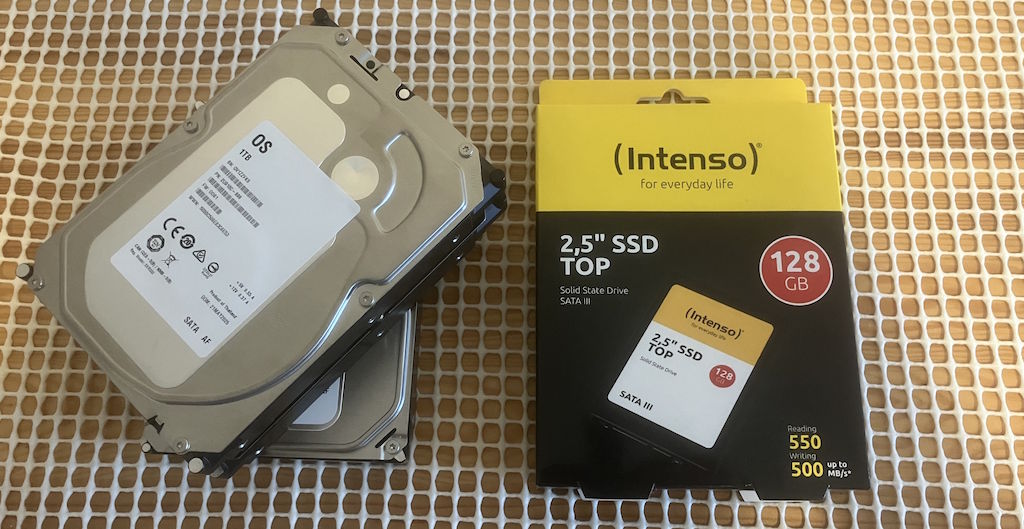
Either way, this is more or less what a full on homelab server setup would look like for me, and I'm happy to be able to procure it on a budget:
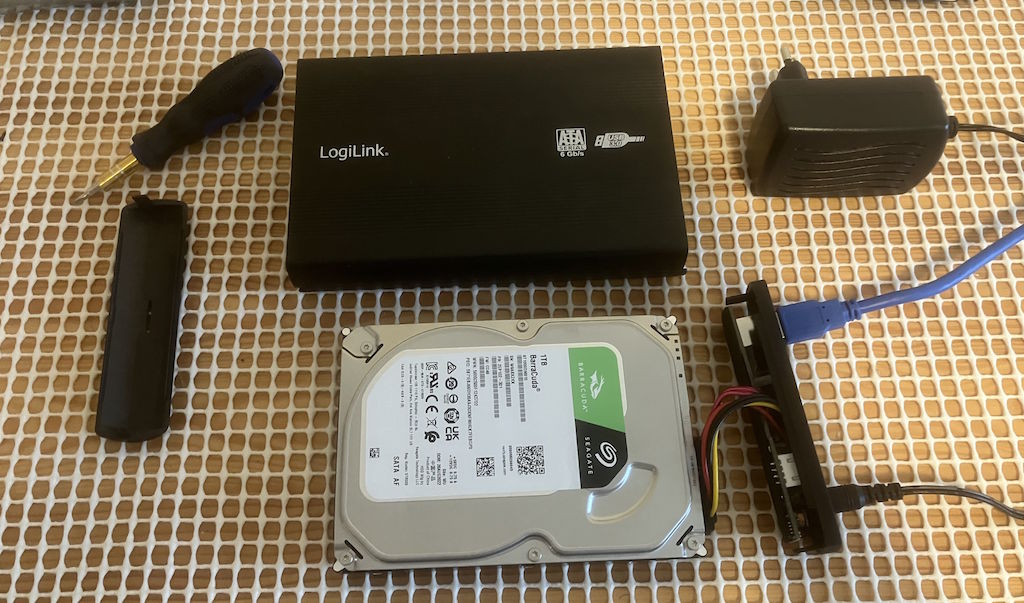
Even though those drives will sit in a drawer for a while until I need them, I decided to at least boot them up and see if they work - whether any of them are dead on arrival. For that, since all of the SATA ports on my main PC are taken up, I just pulled out my USB 3.0 HDD enclosure (which comes with its own power plug, neat) and put the drives there. You can see it here with one of the Seagate drives (I had one that I previously used with Clonezilla in addition to the new one), which I also spun up just to compare the performance:
Let's look at some numbers, shall we?
Some data and numbers
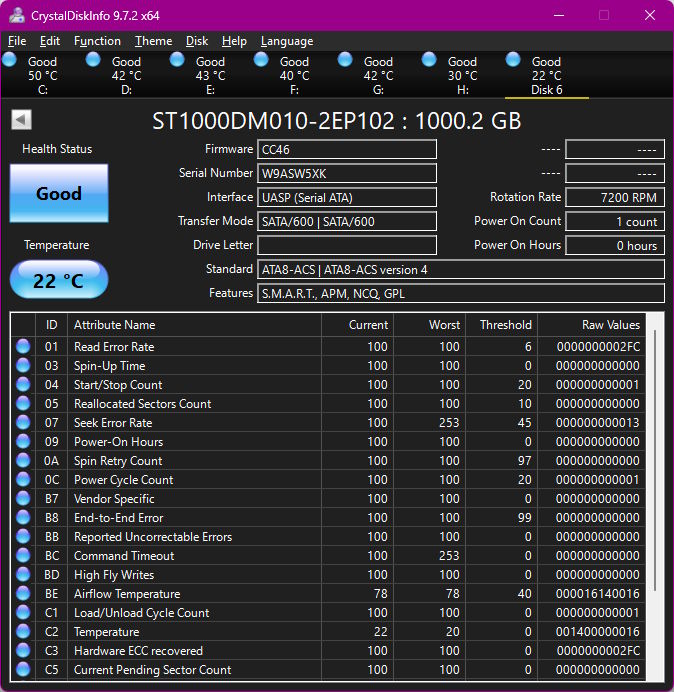
The Seagate drive actually showed that this is its first time being powered on, as you'd expect with a completely new drive. Other than that, no errors or anything to report, since obviously it hasn't had any time to accumulate data, even if there was anything wrong with the drive, shown in CrystalDiskInfo:
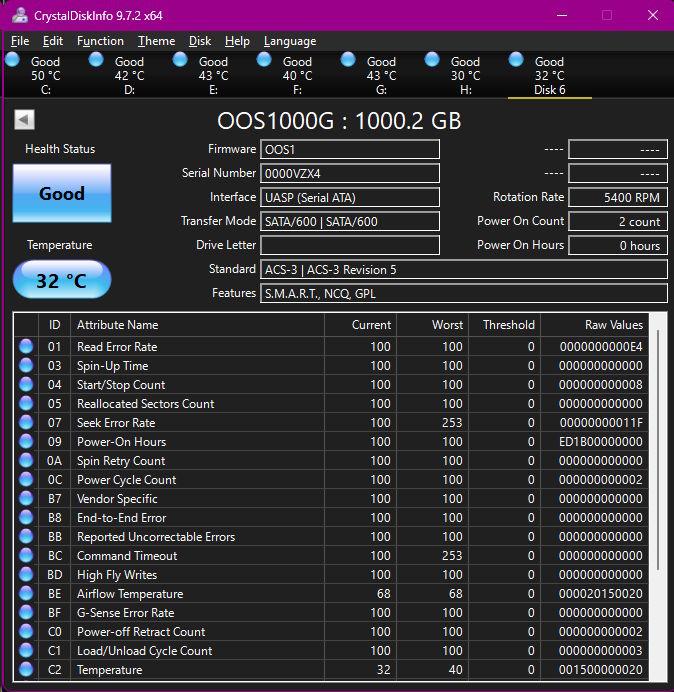
For a quick comparison, here's both of the drives I got from Datablocks, which interestingly enough showed that this is their second time being powered on, but otherwise also didn't really have much in regards to accumulated data. Oh, and also, turns out that they're 5400 RPM drives, compared to my Seagate 7200 RPM drive, here's drive #1:
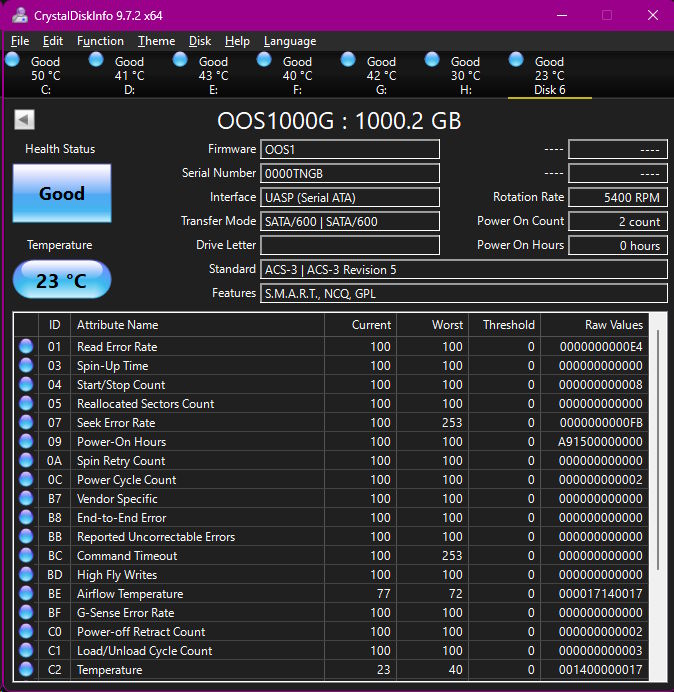
And here's drive #2:
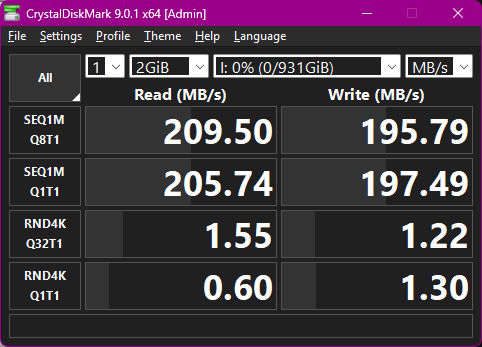
I also decided to run some tests with CrystalDiskMark. Normally you'd want to run it on a large amount of data, but frankly I didn't have that much time, so here's a quick 2 GB read and write test showing us what we already know, that the drives are good for sequential reads and writes, but crumble under random workloads.
Here's the Seagate drive:
Here's the Datablocks drive #1:
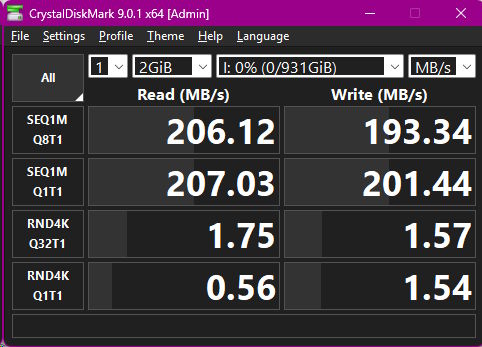
Here's the Datablocks drive #2:
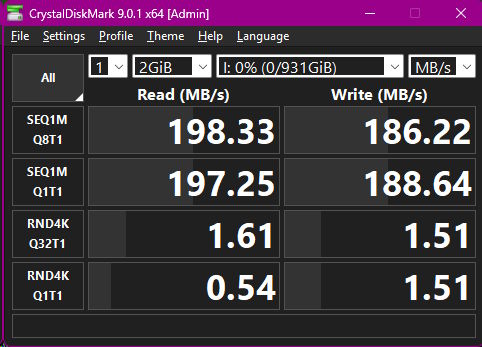
It actually surprised me that the 5400 RPM drives did more or less the same as the 7200 RPM drive in a way where it doesn't seem like a particularly good or bad run on either of their parts. Maybe it's the cache that they have, but even so, unless you are storing a bunch of movies in high quality, I don't imagine you usually move much more data than a few dozen GB at a time. To be honest, even for prolonged tasks like syncing my whole local drive with a homelab drive, I don't think it matters that much even if the new drives were to be a bit slower, given that this isn't something I'd feel every day.
On the other hand, if I ever tried using one of these drives to play a game like Arma Reforger, I'd very quickly find out why you really want an SSD for that kind of a workload - because model LODs and textures would just fail to load in properly in time, like actually happened to me before I moved to having my games be on an SSD, though sadly at the time I didn't really take any pictures.
Either way, I got the drives, I'd probably need to use them for a while to see if they're actually good or whether I got unlucky, other than that - I'm a pretty happy customer! The ordering process wasn't too difficult, the prices were good, the shipping was fast, it went well.
So, was there anything that was lacking?
The bad
First up, I think there is an AI slop background image on the homepage. While the company and the drives are real, seeing low quality crap like that makes me doubt their trustworthiness, if I'd randomly stumble upon the site, I'd be even more inclined to just click away.
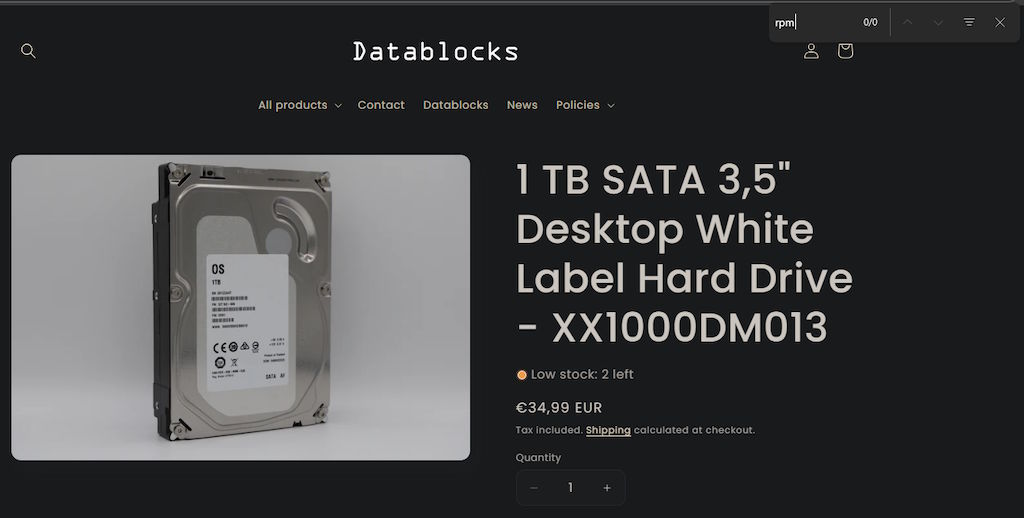
Secondly, the stock kind of sucks for lower capacity drives. At the time of writing, there were only 1 TB ones available and not slightly bigger ones like 2 TB, 4 TB and so on, the next actually available group of drives were 8 TB which are totally outside of my budget. The specs page for the drive I picked also didn't mention RPM anywhere, so I was a bit surprised upon seeing it after receiving it.
A customer might be reasonably upset at that:
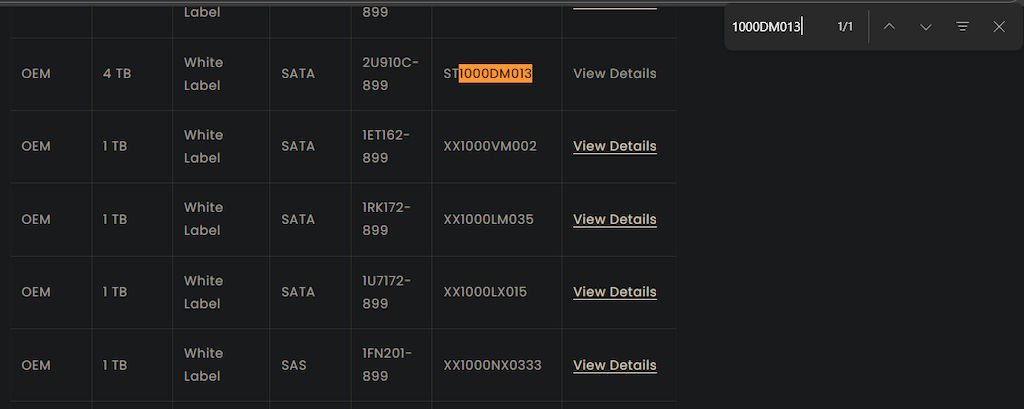
They have a page with more specs, but trying to find the details of that particular drive yields nothing of use, instead I see that it might match a 4 TB drive, which is plain wrong:
That more or less concludes my complaints, nothing I couldn't handle when they effectively allow me to save 2x on drive costs, or at least have some backup drives in this time of uncertainty.
Summary
Overall, I'd say that it's cool that companies like this exist, since it probably also reduces e-waste somewhere along the way. Plus, if you actually do need larger capacity drives, they have plenty of those available as well:
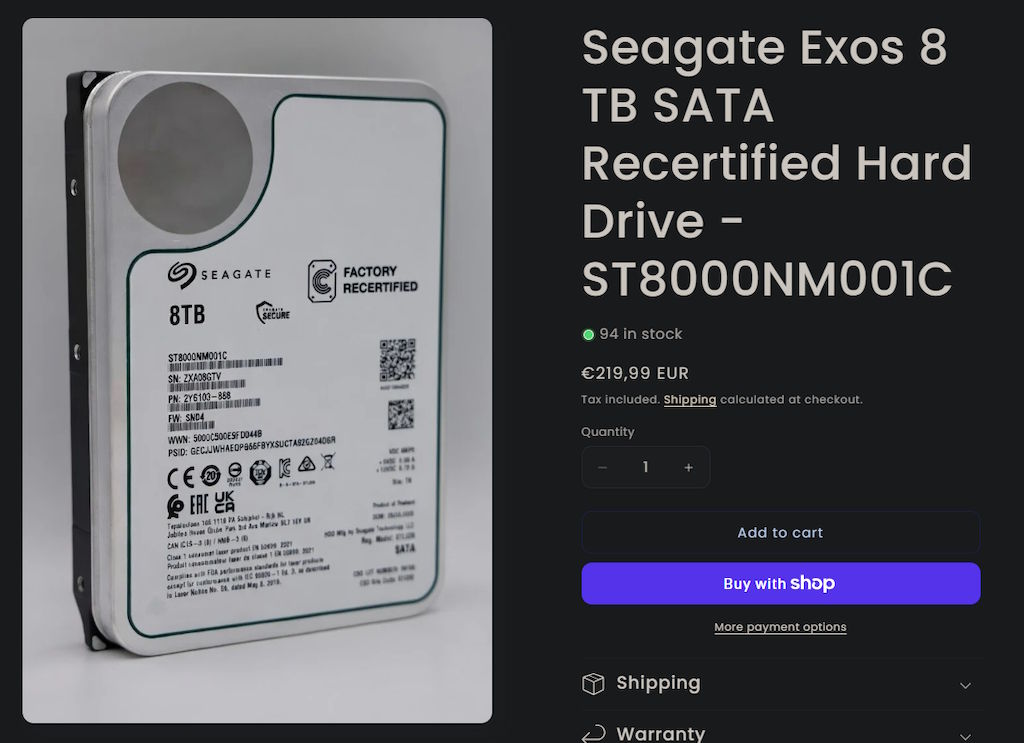
I did look at their blog and it seems like their last restock was around the end of 2024 which does raise some questions, but go figure - it's not like drives go bad quickly and since I doubt they have a super big budget for marketing, maybe the stocks don't dry up that fast anyways.
I'm still undecided where they land between "a few people making a buck and having a few boxes of drives in storage somewhere" and a bigger company, but that hardly matters, since it worked out pretty well for me. Who knows, maybe some day I'll go for the bigger drives, or perhaps they'll even get SSDs in stock.
Update
A person actually reached out and linked what I think might have been the original HN submission that I learnt of Datablocks from! They had a blog post that goes into more detail and has an update 6 months later; also, they tried out the 18 TB drives! I kinda made my own post mostly for visibility, and because I think it's cool that businesses like that exist in the first place.
Other posts: « Next Previous »